
NAB Show 2026 Trends
Every year, NAB Show 2026 gives a snapshot of where the media industry stands. This year felt a bit different.
Yes, the numbers were solid. More than 58,000 attendees from 146 countries, with nearly half attending for the first time. But what stood out wasn’t scale, it was the shift in who’s driving the conversation [1].
Broadcasters are no longer the only center of gravity. Creators, enterprise teams, sports organizations, and streaming platforms are all shaping the direction. The industry isn’t converging toward one model. It’s fragmenting into many, each with its own constraints.
That shift shows up in the tech discussions too. AI, cloud, streaming, all still there. But the tone has changed. There’s less interest in what might be possible, and more pressure around what actually works. At scale. In production. Under real constraints.
A moving market
One of the more grounded conversations came from the Devoncroft opening panel at NAB [2]. The takeaway was simple: the market isn’t growing much, but value is moving quickly underneath.
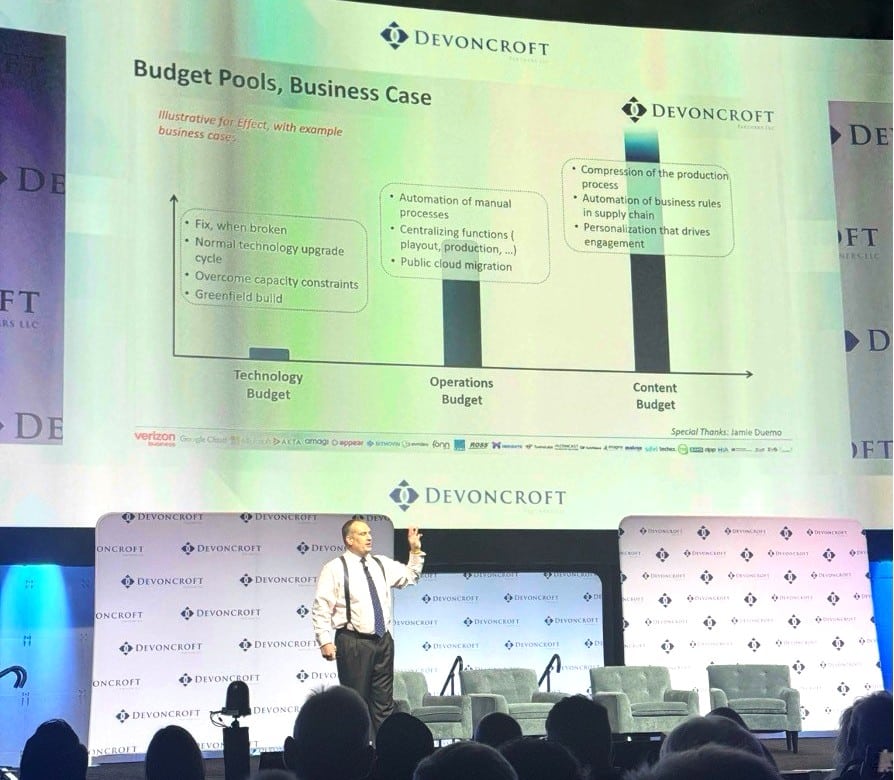
Spending is shifting away from hardware and into software, IP, and control layers. Not because it’s new, but because it’s where operators are finally seeing impact. The focus now is on reducing complexity, automating workflows, and improving economics.
That aligns with what was heard across the show floor and also with how analysts are reading the event. Dan Rayburn noted in his NAB recap [3] that many of the themes on display, from AI to multiview to live scaling, are not new anymore, but ongoing challenges the industry is still working through.
Streaming is becoming an operations discipline, where delivery, monetization, and performance are tightly connected. It’s a shift that’s increasingly visible in how platforms are being built and operated.
NAB show 2026 Highlights: Where things are changing
If you look past the noise, some areas show where this shift is really happening.
MoQ: promising, but not plug-and-play yet
Media over QUIC (MoQ) came up repeatedly, particularly during the OpenMoQ session at NAB.
It is increasingly positioned as a bridge between streaming and real-time delivery, rather than a direct replacement for HLS or DASH. Early deployments, such as YouTube ingest workflows discussed during the session, show clear potential.
But the limitations are just as clear. Relay infrastructure, player fragmentation, and overall ecosystem readiness still need to mature.
The takeaway is familiar. Innovation at the protocol level only matters if it can integrate with existing delivery stacks and operate reliably at scale. This is the approach Broadpeak is taking, focusing on transition paths where MoQ can coexist with existing ABR workflows, leveraging current CDN infrastructure rather than forcing a full replacement.
We shared about the direction we are exploring earlier this year at the Mile High Video 2026 [4] in Denver, presenting work on how to transition large-scale live events toward MoQ without breaking existing architectures, which attracted strong interest and raised practical questions around real-world deployment.
At NAB, this thinking was extended through a live demonstration of an end-to-end MoQ workflow. Built on a publish-subscribe model, the demo combined Broadpeak packaging, Oracle Video at the Edge on OCI, and Bitmovin playback to show how multi-vendor interoperability can work in practice, while achieving lower latency compared to traditional DASH delivery. The goal was not to present a future concept, but to show how MoQ can start fitting into existing streaming pipelines today.
Multiview: users are ready
Multiview is further along. At NAB, it was clear that multiview has moved beyond demos into real usage, particularly for live sports. Sessions from Comcast and MediaKind confirmed that giving users control over layouts can drive strong engagement, while technologies like server-side composition and tiling are making it scalable.
That shift is already visible in usage. During the Streaming Summit, Joe Krell shared that Comcast saw a 300% increase in multiview consumption between October 2024 and October 2025, highlighting how quickly this behavior is taking hold.
This matches what was visible across the show floor and in industry coverage: multiview is no longer a niche feature, it is becoming a standard part of premium live experiences.
Broadpeak’s own work and demonstrations at NAB sit within this same shift. The focus is not on introducing a new concept, but on making multiview practical at scale, reducing the need for heavy encoding while maintaining compatibility across devices.
The open question now is monetization. Integrating advertising and measurement across multiple simultaneous streams, without degrading the experience, remains a complex challenge.

Monetization: getting more precise.
As outlined by Mark Donnigan in his NAB analysis [5], the industry is moving from ad insertion toward yield engineering.
That means focusing not just on placing ads, but on optimizing timing, format, context, and performance. This is especially visible in live sports, where high-value moments can drive premium inventory.
At the same time, monetization is becoming less about adding more ads, and more about making each opportunity more efficient. Formats like pause ads, overlays, or contextual placements show how inventory is expanding beyond traditional breaks, while keeping the viewing experience intact.
But this also introduces more operational complexity. More formats, more dependencies, and more need for coordination across the stack.
In practice, this is where collaboration between delivery and adtech layers becomes critical. Solutions like broadpeak.io reflect this shift, extending SSAI workflows to support more dynamic, user-driven formats while maintaining control over quality and measurement.
The challenge is economics. Making streaming services profitable requires continuous optimization across delivery, monetization, and user experience. That is why tighter integration between video platforms and adtech partners is becoming a key part of the operating model, not just an implementation detail.
What else mattered at NAB 2026
Beyond the selected Broadpeak’s highlights, security was a constant undercurrent.
As streaming scales, so do the risks. Piracy, credential sharing, and unauthorized access are no longer edge cases. They directly affect revenue, especially for premium and live content. Increasingly, security is being integrated into the delivery layer, becoming part of the workflow rather than a separate system.
Stepping back, this ties into a larger set of takeaways from NAB Show 2026.
First, innovation only matters if it works in production. From MoQ discussions to AI use cases, the focus is now on deployability and scale, not just potential.
Second, engagement is no longer the main challenge. Formats like multiview show that users are ready for richer experiences. The real question is how to turn that engagement into sustainable revenue.
Finally, operations is where everything comes together. Delivery, monetization, and security are no longer separate layers. They are part of the same system, and managing that system efficiently is becoming the key differentiator.
NAB 2026 didn’t introduce a single breakthrough idea, but it highlighted how the industry is becoming more pragmatic and focused on what actually works.
Closing thoughts
For Broadpeak, NAB Show 2026 was a strong moment.
The booth saw steady traffic, but what really stood out was the quality of the conversations. Across operators, platforms, and partners, the same challenges kept coming up: scaling efficiently, monetizing better, and securing content.
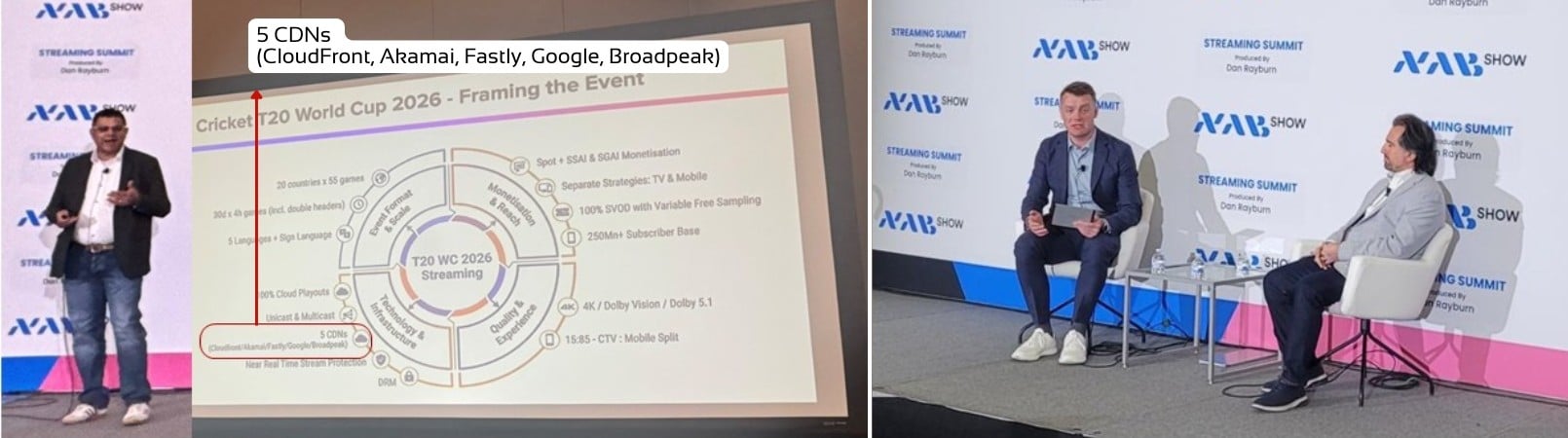
Those discussions extended beyond the booth as well. During the Streaming Summit at NAB Show 2026, a two-day conference track bringing together OTT platforms, broadcasters, and technology leaders to discuss real-world streaming challenges, Xavier Leclercq joined Erdogan Simsek, from Charter Communications, to discuss how a Tier 1 operator approaches streaming delivery, highlighting very concrete tradeoffs around scale, reliability, cost, and observability.
Broadpeak was also referenced in sessions looking at extreme-scale streaming use cases, such as the fireside chat with Akash Saxena on JioHotStar’s ability to handle tens of millions of concurrent viewers, reinforcing the role of distributed delivery and efficient traffic management in real-world deployments. Akash has also discussed these challenges with Broadpeak previously, you can read it HERE.
There was a clear sense within the team that the positioning resonated. The discussions were concrete, grounded in real use cases, and often directly connected to what was being demonstrated on the booth.
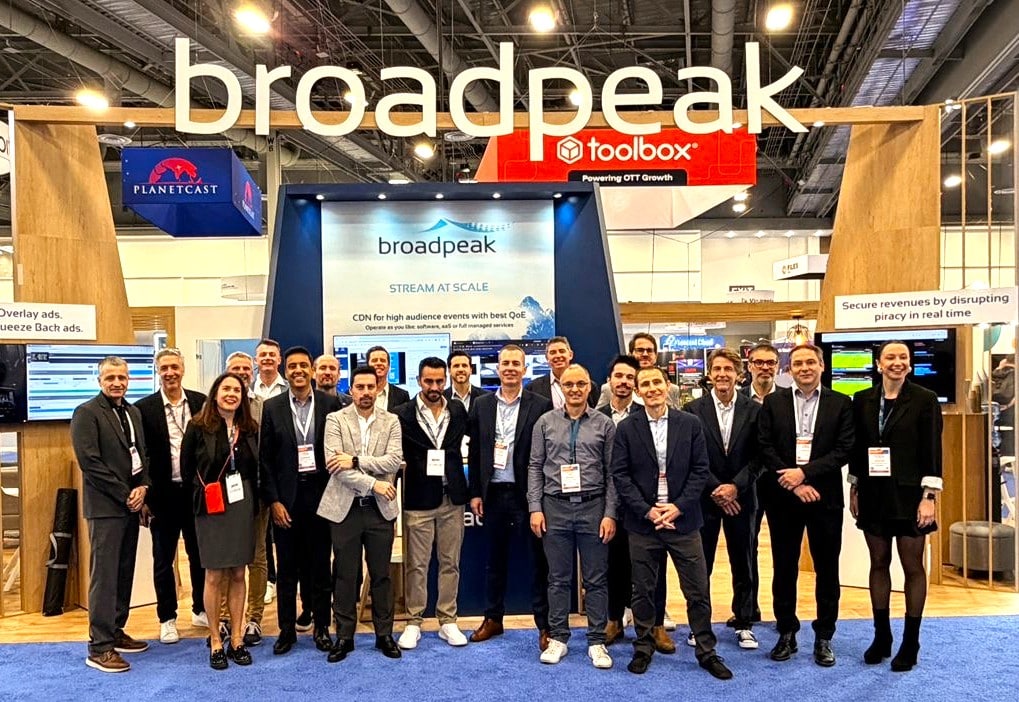
Overall, it felt like a good confirmation that the industry is moving in a direction Broadpeak knows well and is already working on in practice.
Continue the conversation
Third Party Content
[1] The 2026 NAB Show Wraps with Proof the Future of Media and Entertainment is Expanding Beyond Broadcasting – NAB Show | © NAB show 2026
[2] Agenda and Speaker Lineup for 2026 Devoncroft Executive Summit | Las Vegas | © Devoncroft 2026
[3] The Dan Rayburn Podcast. Episode 169: Special NAB Show Recap: Content, Themes, Messaging and Lessons Learned | © Dan Rayburn 2026
[4] Technical Program | ACM Mile-High Video 2026 | © ACM Mile-High Video 2026
[5] (28) Streaming Monetization Is Moving From Ad Insertion to Yield Engineering | LinkedIn | © Mark Donnigan 2026