
Trends 2026
Video streaming trends in 2026 show that growing user numbers is no longer enough and innovation must yield real returns. Success now depends on getting the basics right: keeping costs under control and running ads that work across every screen. Streaming services need to be profitable and sustainable over the long term.
This means utility matters more than novelty. Delivery costs are rising. Piracy is increasing. Traffic spikes demand efficient solutions. So the conversation quickly moves from “what’s next” to “what works at scale”.
This article looks at the main trends shaping streaming in 2026 and what they say about how the business now works.
1. Margins now matter more than growth
For years, streaming focused on rapid expansion, often accepting losses along the way. In 2026, scale still matters, but not at any cost. Success is increasingly measured by how efficiently platforms can stream at scale, how well infrastructure is used during peaks, and whether margins remain intact as traffic grows.
You can see the impact in daily decisions. Encoding, cache placement, cloud usage, and live delivery design get reviewed with cost in mind. Many teams now track cost per streamed minute as closely as engagement.
As expansion slows across mature markets, platforms step back from “traffic at any cost” and refocus on what wins over time: cutting duplicated stackes, handling peak events more predictably, and keeping long-term delivery costs under control.
1.1 Cloud costs come back into focus
Many streaming platforms have learned that cloud scale often comes with high and unpredictable bills. So some workloads are moving (back) onto private or hybrid infrastructure, often inside operator networks, where cost and performance are easier to control. Cloud still matters, but mostly for flexibility and burst capacity, not as the default for predictable, high-volume workloads.
This shift brings teams back to fundamentals. Delivery, monetization, and protection are increasingly interlinked in streaming. Keeping them aligned is key to delivering a profitable streaming service.
2. Bundling is back as app fatigue sets in
Fragmentation drives fatigue amongst audiences. Managing multiple apps, subscriptions, and logins has become a burden for users. Bundling is returning as a way to simplify access and reduce churn.
Telcos and platform owners are rebuilding bundled offers that combine several services, often alongside device or network access. The intent is to reduce friction for users.
For delivery teams, consolidation changes operating conditions. Traffic concentrates on shared infrastructure. Identity spans services. Quality expectations rise. When several services ship as one offer, reliability is judged across the bundle, not per app.
2.1 More screens, higher delivery expectations
At CES 2026, one phrase came up repeatedly: “everything is a computer”. Streaming endpoints now include TVs, phones, cars, and embedded screens, and users expect the same level of quality on all of them.

Devices also do more locally. Smart TVs now ship with AI chips for scene recognition and voice control. Cars analyze content and context in real time. Even everyday connected objects come with sensors and basic logic.
In short, more decisions now happen closer to the viewer, from playback and quality adaptation to ad signaling and contextual stream handling.
When you combine bundling with more endpoints, delivery becomes less forgiving. A problem in one place can affect the whole offer. Platforms need systems that handle combined traffic peaks, keep quality consistent across services and devices, and provide a system-wide operational view rather than app-level visibility.
3. Edge economics reshape streaming delivery
The economics of content delivery continue to tighten. With CDN margins under pressure, differentiation is limited and scale alone no longer guarantees profitability. Operators and platforms are responding by taking more direct control of edge delivery. This includes greater ownership of caching, clearer visibility into traffic flowing through their networks, and delivery costs that can be better predicted over time.
This also pushes hybrid architecture as many platforms move predictable workloads back onto private infrastructure and use cloud more selectively.
3.1 Low Latency at Scale
These choices matter most for live content and targeted advertising. Sports, live channels, and interactive formats all demand low latency. New protocols help, low latency cannot disrupt DAI workflows for instance. In practice, reliability still matters most.
To meet these expectations, delivery should move closer to the end user. Some operators and platforms are building more of their delivery stack themselves, using new software approaches such as EdgePeak™, combining high performance with the flexibility needed to operate at scale.
4. Advertising becomes the primary revenue engine
In 2026, advertising moved from a secondary role to the primary revenue driver in streaming.
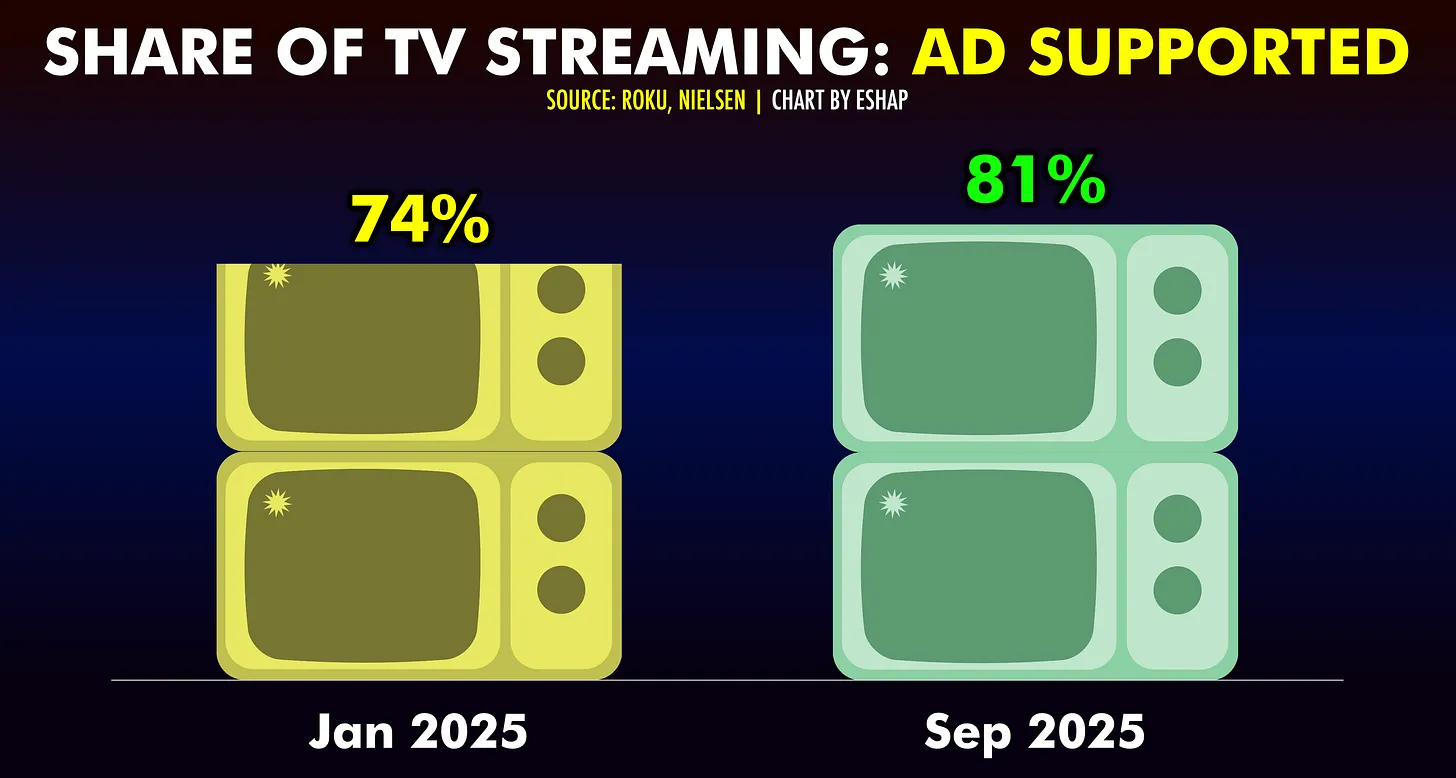
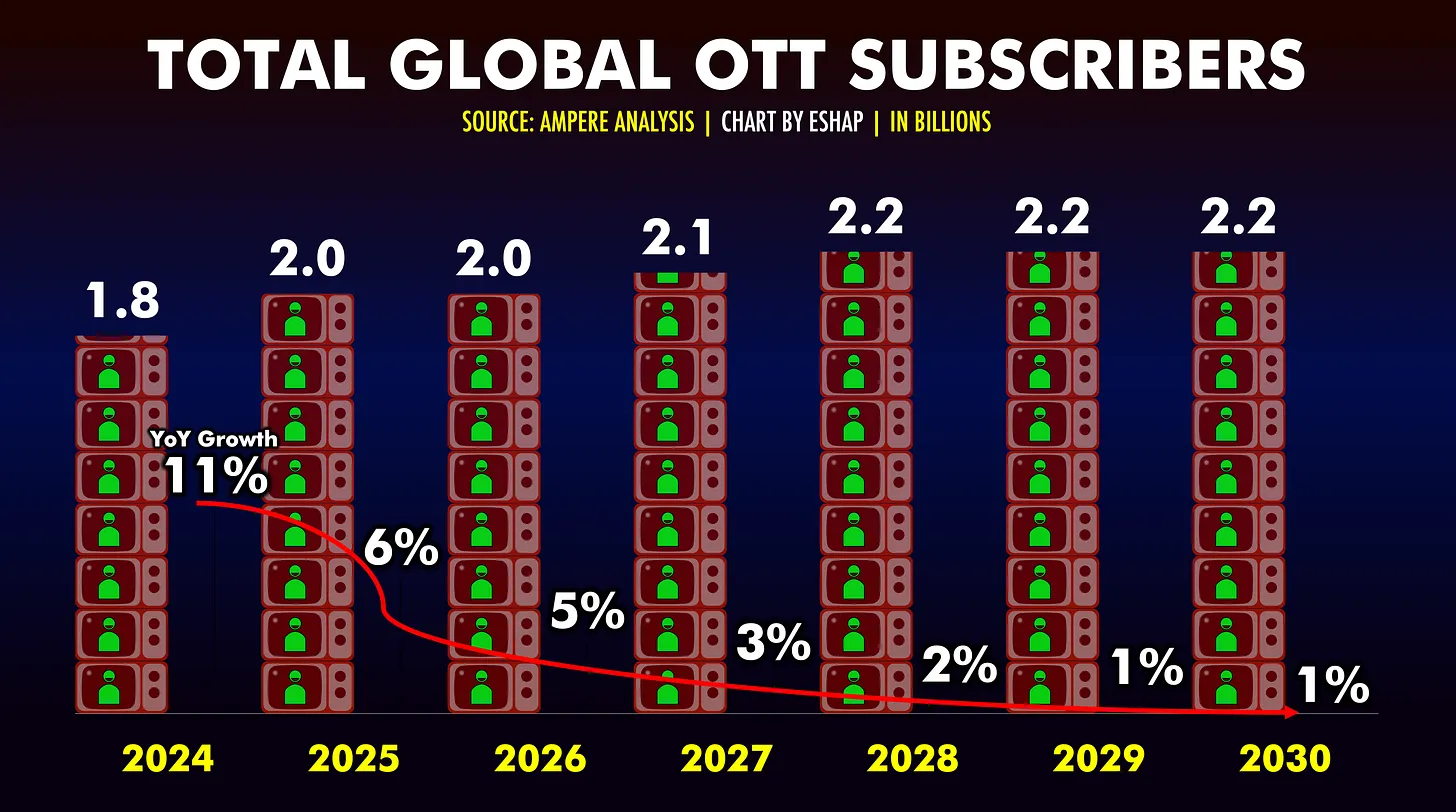
Media analyst Evan Shapiro has explained why. Subscription growth has slowed, first in pay TV and now in streaming. The signals are visible in platform behavior. Netflix tightened account sharing, raised prices, and stopped reporting subscriber numbers. Disney is taking similar steps. This is what a mature market looks like.
As subscription growth slows, platforms are turning more to ad-supported models. Many viewers are open to this change after years of adding subscriptions, and ad tiers or free options help lower monthly costs.
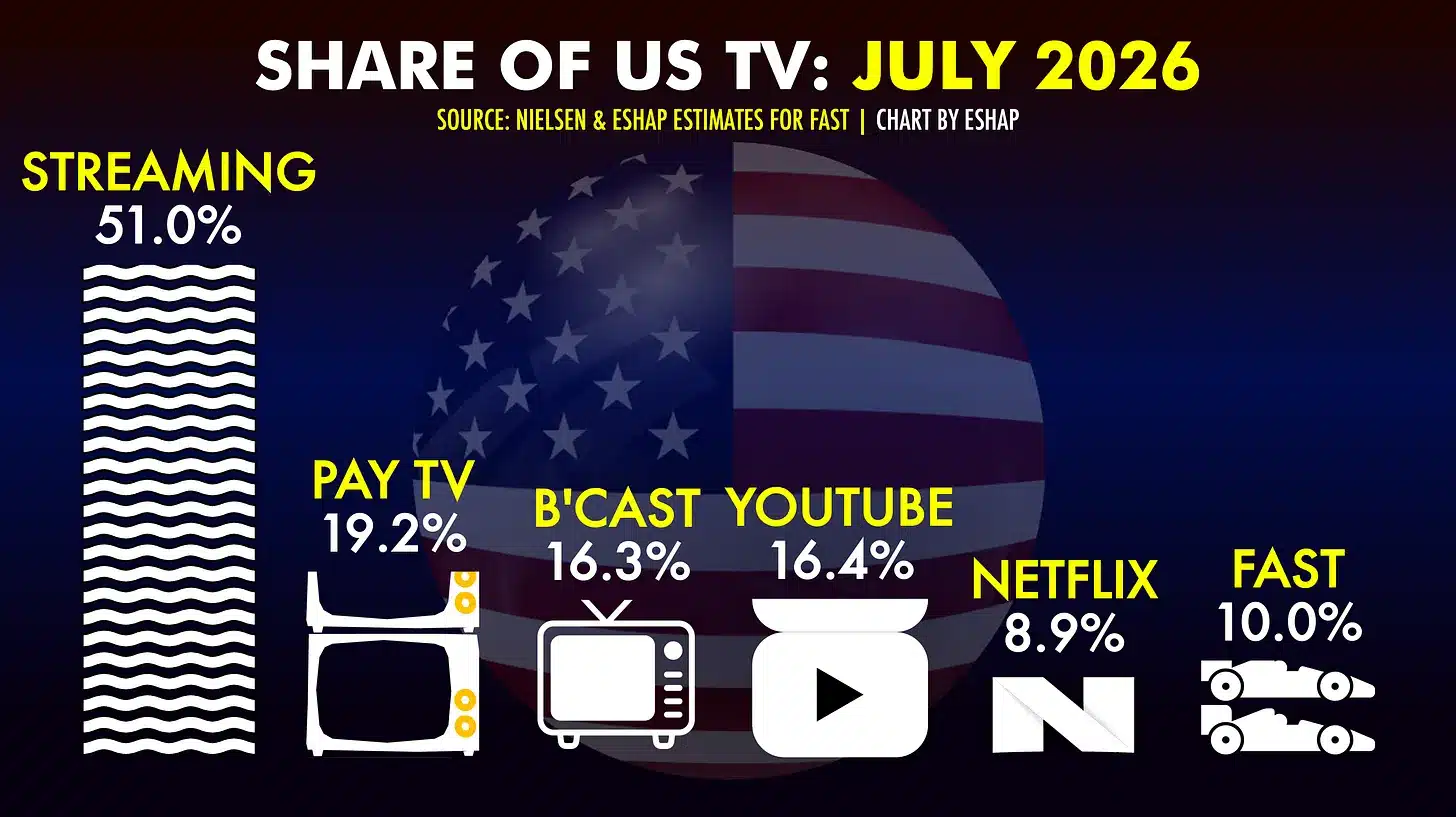
Data shared by Evan Shapiro shows how far this shift has gone: streaming now accounts for more TV viewing than broadcast and pay TV combined, with YouTube leading overall and FAST services reaching audiences on a similar scale to major subscription platforms.

Industry experts agree. Adweek identifies AVOD, FAST, and CTV as the fastest-growing segments, driven by advertisers looking for scale, accountability, and measurable outcomes. CES 2026 reflected the same priorities. Now the key question becomes how ads work in real conditions.
In 2026, the question is no longer who uses AI, but how well it is applied to make advertising work at scale.
You see this first in context. AI helps place ads based on what is happening in a scene or moment, not just who the viewer is. It also supports content analysis, metadata, and discovery, shifting CTV away from broad targeting toward relevance in real time.
You see it just as clearly in measurement. Advertisers want clear performance signals, and transparent metrics influence where budgets go. AI supports this too, by helping teams analyse content and adjust campaigns while they run.
As advertising becomes central to streaming revenue, it also affects delivery directly. Higher ad loads and live formats leave little margin for error. Missed markers, latency, or unstable playback instantly turns into lost revenue.
This is why delivery and monetization are now tightly linked. Ad insertion, stream stability, and measurement need to work together, often through shared operational layers such as broadpeak.io, across on-prem and hybrid environments.
5. Piracy becomes a delivery and cost problem
Piracy has been an important topic. The scale of the problem is large. According to Parks Associates, content providers are expected to lose more than USD 113 billion to piracy by 2027 in the US alone. This is not only about lost subscriptions or missed ad revenue. Pirated streams also create real traffic because they use CDN capacity, increasing bandwidth costs, and competing with paying viewers for the same resources.
With major sports events ahead, including the FIFA World Cup 2026™, this becomes even more sensitive. Large audiences bring traffic spikes, and piracy tends to rise at the same time. When illegal streams grow during those moments, they increase delivery costs and put pressure on revenue for legitimate platforms, even when service quality is maintained.
So piracy is no longer only a legal issue. It’s a delivery and cost problem. Credential sharing, token abuse, scraping, and illegal restreaming make traffic harder to manage and can destabilize live services when demand is highest. General security tools often miss these issues because they aren’t designed for video streaming at scale.
In 2026, stream protection becomes an operational requirement. Reducing pirate traffic lowers delivery costs, protects ad inventory, and keeps quality stable when audiences peak.
What this means for you
If you look across video streaming trends in 2026, the platforms that hold up are not doing anything flashy. Instead, this is about doing the basics well, consistently.
Delivery costs stay under control while preserving viewing quality. Ads work properly on live and on-demand content. Protection is part of delivery, not something added later. And the infrastructure doesn’t fall apart when traffic spikes.